5. Communication for sustainability: information and awareness campaigns
Adina Palea
The USE-REC project was won and implemented in a favorable period for interventions in support of sustainable development. The international context shows an intensification of efforts to achieve the sustainable development goals assumed by the United Nations 2030 Agenda, with research revealing that only „15% of the targets have been achieved” by September 2023 according to the Secretary-General of the United Nations, António Guterres 2023, SDG Summit).
Regarding the Romanian landscape, we notice that sustainability has become a „buzzword” used by opinion leaders, journalists, professionals from different fields and, of course, communication specialists. Concerns about sustainability are visible in the strategies of companies, the operational plans of institutions, the names of events, the texts of advertisements and even in the educational offer of universities.
In the Politehnica University of Timisoara, sustainability can be found in the rector’s management plan as a separate chapter, and at the administrative level as an area of competence and responsibility assumed by one of the vice-rectors of the institution (the portofolio of Investments, heritage and sustainable development, starting with the 2024–2029 mandate). Moreover, Politehnica University Timisoara has constantly assumed a role as a formative leader at the community level and as a vector of development, including through the early adoption of European values (Cernicova et al., 2014, p. 100), of international scientific and economics models.
The core of the implementation team is made up of teaching staff from the Faculty of Communication Sciences, who share the belief that the link between all initiatives and concerns for sustainability is Communication, respectively that through information and awareness campaigns, behavior changes can be achieved in the direction desired by the society. Public relations and marketing are the disciplines actively involved in driving positive change to build a more sustainable future.
These concerns are found under the umbrella of social marketing, defined by the German specialists Manfred Bruhn and Jörg Tilmes (1989) as “planning, organizing, implementing and controlling the marketing strategies and activities of non-commercial organizations, which are designed, directly or indirectly, for solving social problems”. According to the authors, communication for sustainability is often limited to providing information. However, researchers warn, raising awareness of a problem does not automatically lead to the implementation of actions to change the situation. To put society on a truly sustainable path, people must not only become aware of the need for sustainable choices, but also change their behavior. The premise of sustainability communication is that national and local authorities can bring about this change through emotional, personal and practical communication – partly through attractive and effective campaigns that make sustainable lifestyles fashionable and ‘cool’ – combined with good policies and infrastructure to enable people to make the right informed choices. (2006, Communicating Sustainability: How to Produce Effective Public Campaigns| La Iniciativa de Comunicación (comminit.com) ).
The implementation of such measures contributes to increasing consumer awareness of environmental issues and forces brands to strategically use sustainability as a key component in their marketing efforts (Digital Media Team, 2023). At the same time, social campaigns are an important tool for promoting positive change in social attitudes (in ecology, health prevention, promoting tolerance, etc.). Improving their efficiency can therefore have a tangible effect on many aspects of life – both for individuals and for society as a whole. Social campaigning, also known as public awareness campaigning, is defined as „a comprehensive effort that includes multiple components (messaging, media relations, government affairs, budgeting, etc.) to help achieve a specific goal ” (Scarlet, 2013). Typically, a campaign attempts to raise awareness of a key issue and induce a desired positive behavioral change (Coffman, 2002). Among the most widespread activities carried out within social campaigns, we can mention: communication campaigns, press publications, distribution of brochures, the organization of events, happenings or more direct educational actions. They also include advertising through different types of media – television, radio, internet and print, thus drawing the attention of a wide audience to the issue (Borawska, 2018), requiring innovation skills to shelter the audience from the feeling of “deja vu ” in receiving broadcast messages (Palea, 2010; Ahmed et al., 2020).
Campaigning as a process is universal across all subjects and locations, systematically utilizing fundamental strategic frameworks and principles developed over the past half century. Campaign designers perform a situational analysis and establish objectives that lead to the development of a coherent set of strategies and implement the campaign by creating informational and persuasive messages that are disseminated through traditional media, new technologies, and interpersonal networks (Atkin, 2012).
Public communication campaigns are an attempt to shape behavior toward desirable social outcomes. These behaviors can include eating right, drinking less, recycling, breastfeeding, reading to our children, getting a mammogram, voting or volunteering. The final objectives of the campaigns are the formation of behaviors or the adoption of policies that lead to the improvement of life for individuals, families and communities (Coffman, 2002, p.5).
The University Students Engaging in Responsible and Sustainable Energy Consumption (USE-REC) project offered the opportunity to test different types of communication campaigns and evaluate the effect produced among the main target audience – the students from the dormitories of the Politehnica University Timisoara. The results are inspirational and represent a benchmark for the development and implementation of other projects on the theme of responsible consumption of resources. At the same time, regarding the secondary audience categories, the project’s conclusions are encouraging for the way in which universities, public utility providers, local authorities and the economic environment have collaborated to ensure modern, sustainable student campuses, oriented to the current and future needs of the young generations. The events, meetings and debates mediated by the project led to the creation of synergy between the initiatives and to the acceleration of the implementation of sustainable development objectives in the Politehnica University Timisoara, the Politehnica Foundation and in the local community.
To maximize the involvement of all stakeholders, we opted to apply the three-step CBE (co-create, build, engage) model proposed by Rundle-Thiele et al., as an extension of social marketing applicable to changing social behavior with environmental benefits. The key force that social marketing brings to the areal of social change is the development of something of value, which motivates and mobilizes people to voluntarily change their behavior, realizing that the effect of the new behavior benefits, directly or indirectly, the person, the society, but also the planet (Rundle-Thiele, 2021).
The benchmarks for social marketing were first proposed by Andreasen (2002) and were further expanded to eight benchmarks by the National Center for Social Marketing (2024), which should serve as principles for social marketers to qualify their interventions as social marketing. Realizing that there is still little effort to apply the principles that distinguish social marketing from other behavioral science approaches, Rundle-Thiele et al. (2021) developed the CBE framework to serve as a three-step guide to designing, implementing, and evaluating a real social marketing program. Founded on the benchmarks of social marketing, the CBE Framework provides more than a general checklist to those looking to design and implement a social marketing program. The model proposes a guide with step-by-step instructions, signaling when each of the eight elements in the benchmarks should be introduced for the first time throughout the entire process of developing an intervention (Lee, 2022, p.3).
In the proposed model, programs are co-created (C) together with the people targeted by the issue and built (B) to create and embed lasting solutions, and ultimately engage communities (E) to participate in these programs. This linear process is applied when the program is first developed and the stages fade after the first implementation, as the CBE steps become continuous when programs are embedded in communities (Rundle-Thiele, 2021).
1. Co-creation ensures that programs are designed by and for people, which helps deliver programs that empower people to make changes that benefit themselves and society.
2. Programs are built in consultation with stakeholders. Partnerships are formed to ensure that people and funds are available to support program delivery. Partnerships are built to expand the reach of programs to help engage more people.
3. Engagement is the final stage of the 3-step social marketing process. During the engagement stage, social marketers focus their efforts on:
• Making sure people are aware the program is available.
• Communicating the benefits that people and stakeholders will have.
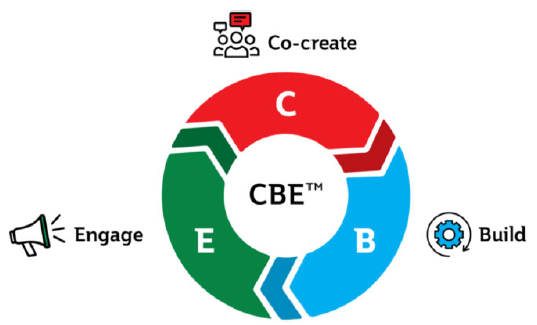
CBE Model source Rundle-Thiele et al., 2021, p.5.
Depending on the objective, the communication campaigns carried out by the project whose flagship slogan was „I care” used different combinations of communication channels, types of messages and broadcasting frequencies of messages. There was a constant concern to identify and use predominantly ecological solutions, therefore the use of flyers, banners and pop-ups was avoided, reducing the production of printed materials to a minimum. The focus fell on „green” solutions such as videos, online messages, electronic announcements, which involved both the use of the already existing communication infrastructure and the development, through the project, of a new appropriate and innovative communication infrastructure.
In the same logic of identifying sustainable information/promotion solutions, the majority of the offline information campaigns were based on participating with our own „I care” stands in the large, traditional UPT events. As it turned out, our stands became a point of attraction for the participants of those events. In addition to ensuring the presence of the project at the major events of Politehnica University Timisoara (graduation celebration in 2023, the start of the academic year, UPT Days, Career Days, 103 for Poli) the project team also created personalized events, part of the awareness/education campaigns, which focused public attention to core messages for sustainability in campus life.
We opted for the presentation of communication campaigns and events in a succinct form, similar to an evaluation sheet, with the campaign elements featured and the communication component highlighted. The model created can be seen as a source of inspiration, easy to understand and multiply. The presentation follows, on the one hand, the stages described by Rundle-Thiele, Co-create – Build – Engage, and on the other, it groups the steps undertaken according to the type of interaction with the target group: offline, online or mixed.
1. Co-creating
Development of the visual identity of the project, in consultation with the beneficiaries
The visual identity of the project was based on the main message – „I care”. We illustrated this idea by creating a shield to protect the values we stand for: concern for the judicious consumption of water, electricity and heat, respectively for the correct sorting of waste. The color scheme was inspired by the orange of the financing body and the green traditionally associated with environmental concerns.
The first communication channel activated was the web page, on which essential information about the project and its objectives were uploaded. Later, social media Facebook and Instagram accounts were developed, which grew organically, except for a few paid promotion campaigns (run in October – November 2023 and March – April 2024, respectively).
The logo and slogan were also discussed with the Norwegian partner during his first visit to Timisoara.
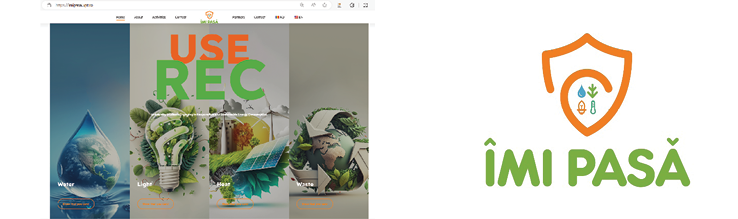
1.1. Web page 1.2. Project logo
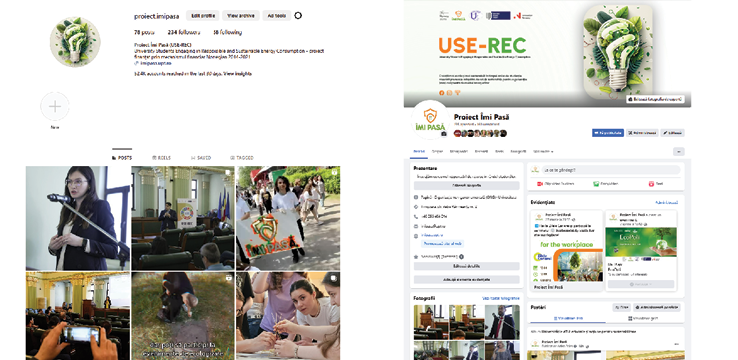
1.3. Instagram page 1.4. Facebook page

1.5. Project header
Another important result of the co-creation stage was the preparation of a new lease contract for students, drawn up together with the administration of the Politehnica University Timisoara and representatives of the student associations. The contract entered into force starting from the academic year 2023/2024 and contains provisions on the responsibility of students regarding the consumption of water, electricity, thermal energy, respectively on the selective collection of waste. In the elaboration of the provisions, the opinions of the students and the dormitory administrators were taken into account, as well as the vision of the UPT management regarding the rights and obligations of the students who benefit from accommodation in the Politehnica’s dormitories.
2. Building the team of sustainability ambassadors
Individual interviews and group interviews were conducted with all stakeholders and, subsequently, trainings were provided for each target group. Details of the research and training stages can be found in Chapters 3 and 4.
2.1. Summer school and trainings for students and building administrators
Date: 5–7 July 2023, 19–20 July, 13–14 October, 20–21 October
Event details: Ensuring a common knowledge fund that can support resource-saving behaviors, respectively reducing the CO2 footprint in campus life and activities.
Target group: students of the Politehnica University Timisoara, especially from the Faculty of Communication Sciences
Main objectives: training student sustainability ambassadors to support further project activities and confidently disseminate messages about caring for the environment. Making administrators aware of certain existing practices in the Campus, existing improvement solutions and the support they can count on in their endeavors.
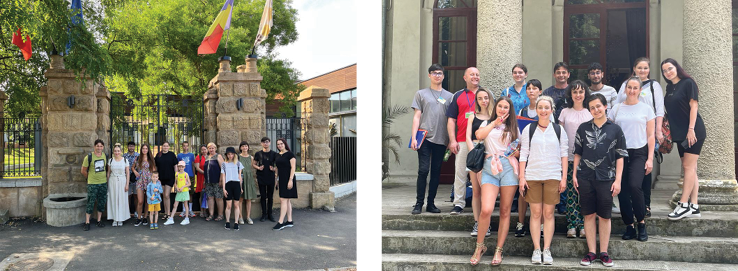
2.1.1 Visit to the Water Museum in Timisoara 2.1.2. Lovrin research station
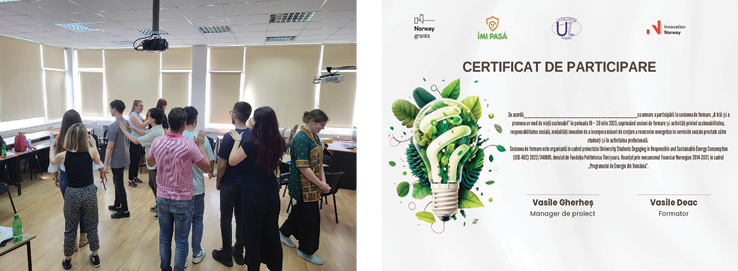
2.1.3. Day 1 of the Summer School 2.1.4. Design of Participation certificate
As a result of the experiences gained by the project team, we added to the training sessions a seminar for the development of sustainability skills for the workplace, held on the occasion of the spring edition of Career Days in UPT (2024), respectively a series of webinars under the slogan “I love the planet, I care about resources”. The 6 episodes explain and promote the advantages of adopting a sustainable lifestyle. In the first two weeks after the creation of the YouTube channel and the posting of the webinars, the educational content was accessed by more than 8000 people.
The expected results aimed at increasing the target group’s knowledge of renewable energy and energy efficiency, improving students’ skills to adopt and promote sustainable and eco-conscious behavior.
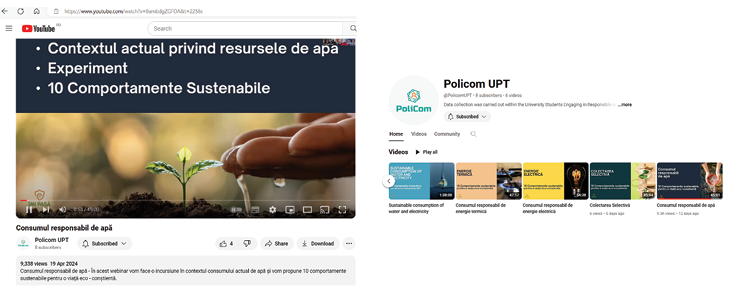
2.1.5. Responsible water consumption 2.1.6. The webinar series
2.2. Development of additional partnerships
To expand the impact and help motivate students, additional partnerships were developed. One with the supermarket chain Profi, which offered vouchers for each of the 600 residents of the winning dormitory, the second with BRD, in order to further motivate students to participate in the video message contest about caring for the environment, and the third with Retim SA, the local sanitation company, to optimize the separate collection and management of recyclable waste in the student campus.
2.2.1. BRD – Groupe Société Générale
The project team initiated a partnership with BRD in order to offer the winning students of the video message contest an even more attractive package. The bank’s representatives were immediately open to collaboration. The contents of the offered package can be seen in the image below.
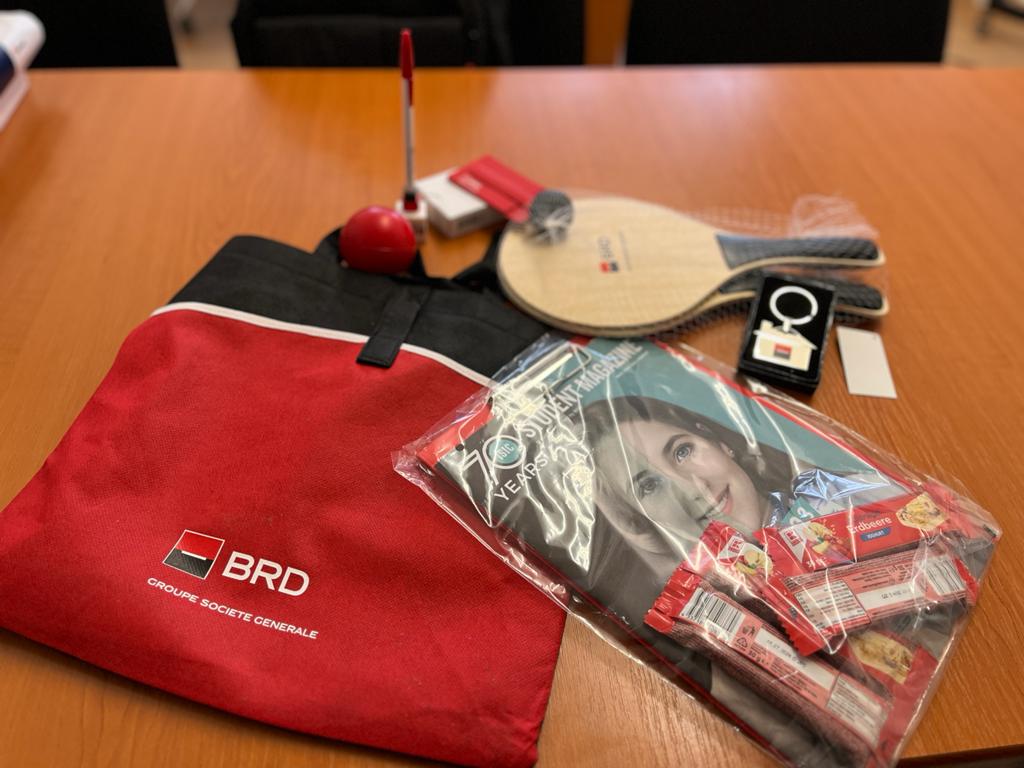
The contents of the package offered by BRD
2.2.2 Profi Rom Food SRL
The openness towards information/awareness projects aimed at the topic of sustainability could also be observed through the sponsorship offered by the Profi supermarket chain to each student from the winning dormitory. The purpose of this support was based on the pro-environmental campaign of the commercial chain, which wanted to illustrate that it „puts soul into the environment”. The sponsorship provided was cross-publicized, both on the project’s and the partner’s communication channels.
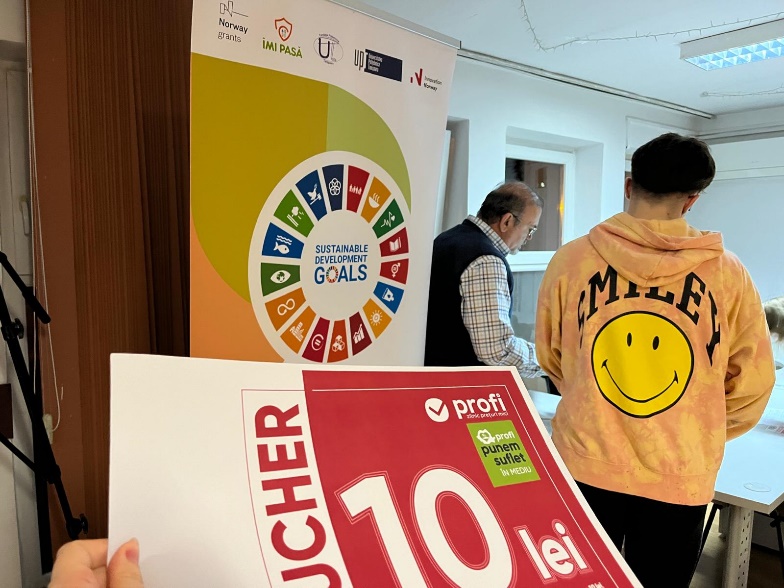
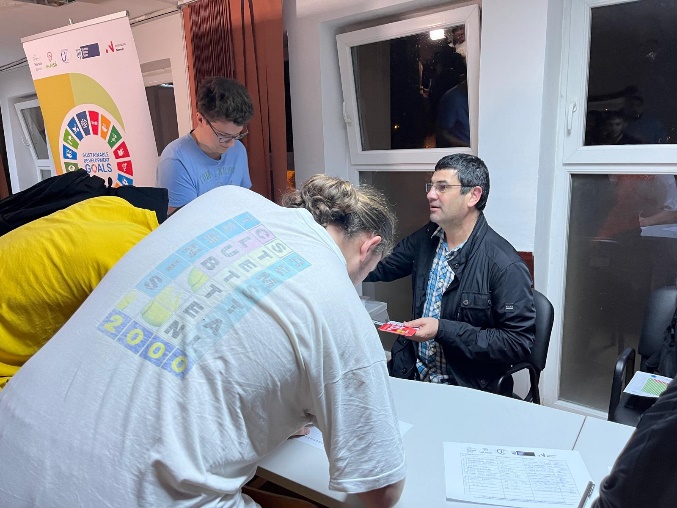
2.2.2.Handing out the vouchers offered by Profi
2.2.3 Retim Ecologic Services SA
The educational component of the students living in dormitories was supplemented by the partnership with Retim, which offered, through a pilot project, 2000 yellow bags, informative materials on the correct sorting of waste and specialized trainings. Politehnica University aided the initiative and purchased metal devices necessary to facilitate the use of recycling bags for paper, cardboard, plastic and aluminum.
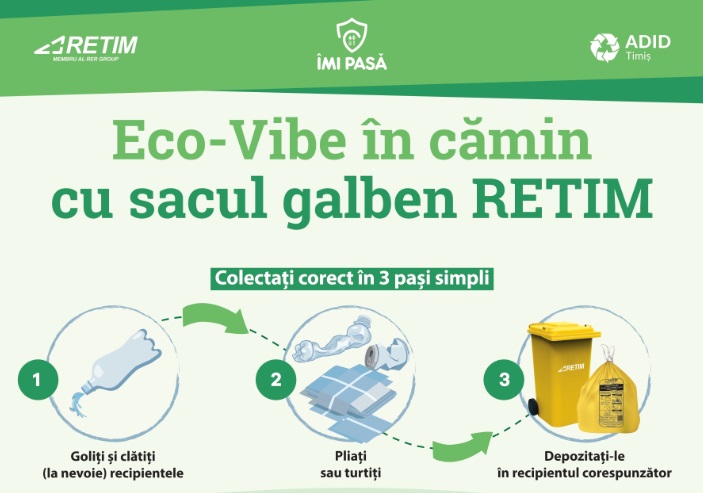
2.2.3. Example of a graphic layout for the campaign supported by Retim
3. Engaging beneficiaries in dedicated campaigns and activities
Offline campaigns
3.1. Alumniversum graduation event
Date: 1 July 2023
Event details: The Alumniversum graduation ceremony has been organized since 2020 on the „Science” Stadium of Politehnica University Timisoara, being a national benchmark for this type of event Home – Alumniversum 2023 (upt.ro)
Target group: graduates of 2023, their families and friends.
Main objectives: to increase the visibility of the project, to raise awareness of the impact each one of us has on the environment, to collect messages for a „greener future” that will constitute an additional benchmark regarding the knowledge and concerns recent graduates have about the environment.
Participants: approximately 1000 people, graduates of all 10 faculties of the Politehnica University Timisoara, their families and friends, representatives of the academic environment, representatives of the economic environment.
Communication channels: via images – through the photos offered to the graduates, in writing – through post-its with messages written by graduates, orally – through the project team.
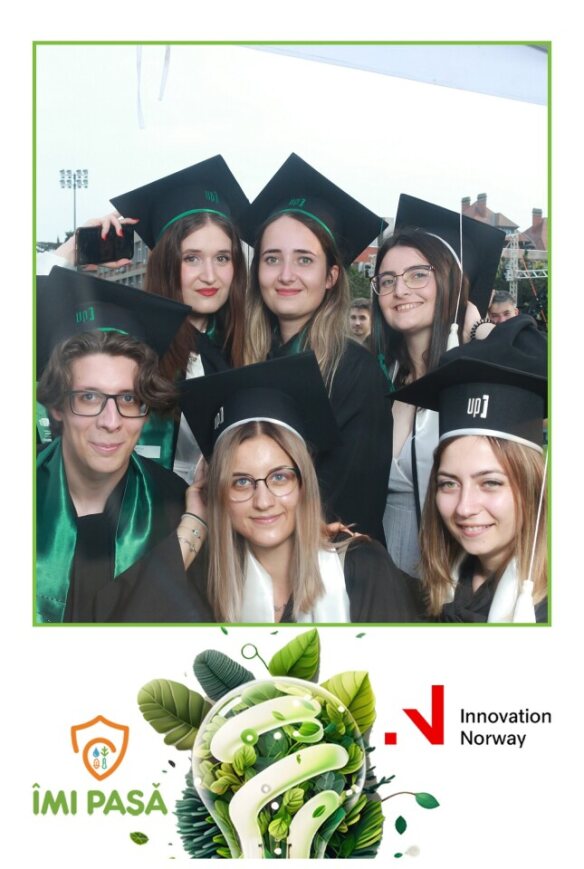
Activities: setting up a dedicated stand, taking instant photos that encompassed the visual identity of the project and offering them free of charge to each person caught on camera, collecting messages for the future and building a pane with the messages of the graduates.
Results: approx. 400 people receiving photos, over 70 messages written by graduates, 1000 people who came into contact with the stand and the project team.
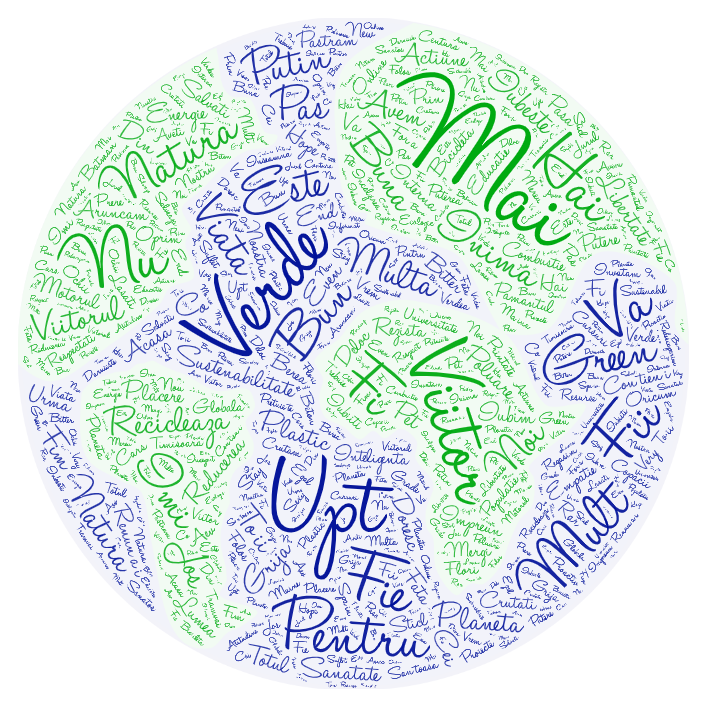
Conclusions: the USE-REC stand represented an important point of attraction within the Graduation Ceremony and had a direct impact on the people caught on camera, the graduates who wrote a message for the future, respectively all those who passed by our stand and read the messages for a greener future. Messages such as „save nature”, „more O2, less CO2”, „green is the new sexy” or „give up PET Beer. It’s better in a bottle anyway” show the young generation’s concern for the future of the planet.
3.2. Start UPT
Date: 22 September 2023
Event details: Start UPT is the opening event of the academic year, dedicated to first-year students. It spans over a weekend full of activities of interest to freshmen – from official speeches to concerts, from meetings with UPT’s partner companies to visiting of some cultural centers (6) StartUPT // Bun venit în Universul Politehnicii!| Facebook
Target group: first-year students of Politehnica University Timisoara, representatives of all student associations present at the stadium.
Main objectives: enhancing the project’s visual identity, promoting the project’s social media pages, launching the video message contest.
Participants: approximately 800 people from the 10 UPT faculties.
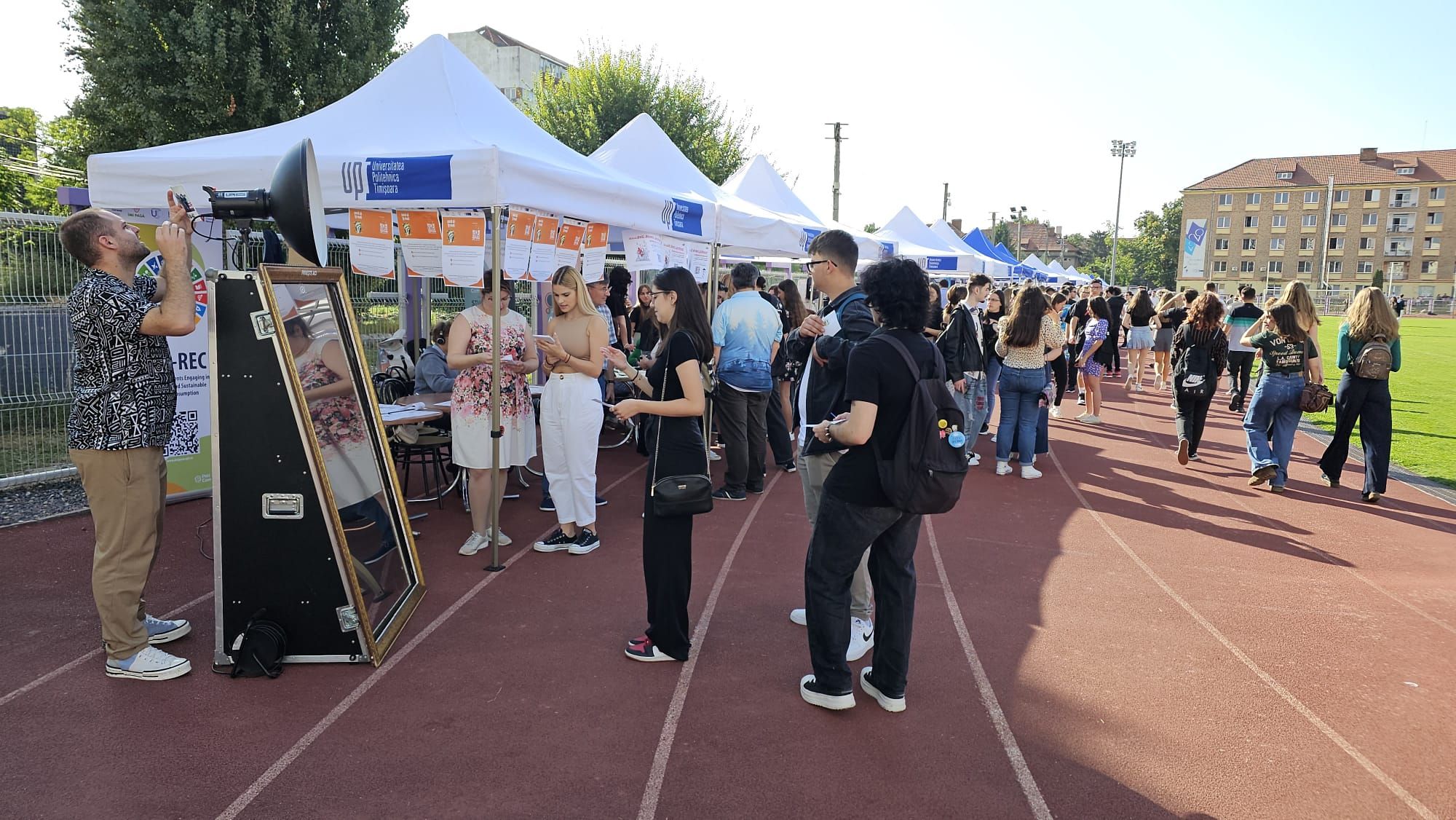
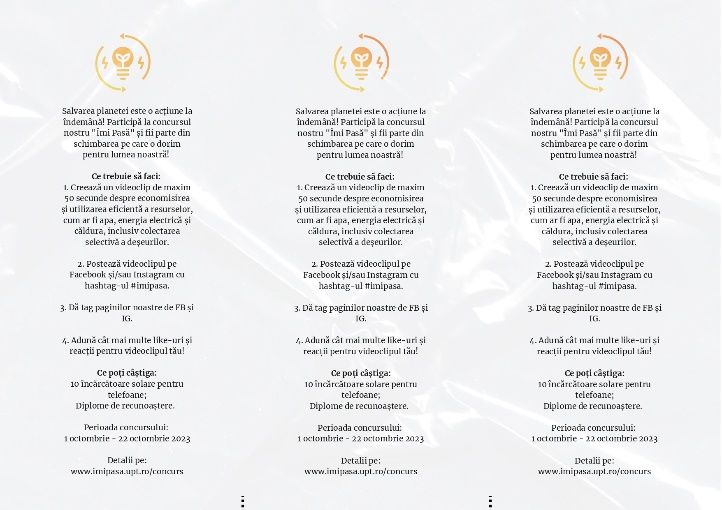
Communication channels: via images – through the photos provided free of charge, in print – through flyers with information about the video-message contest, orally – through the project team and project ambassadors.
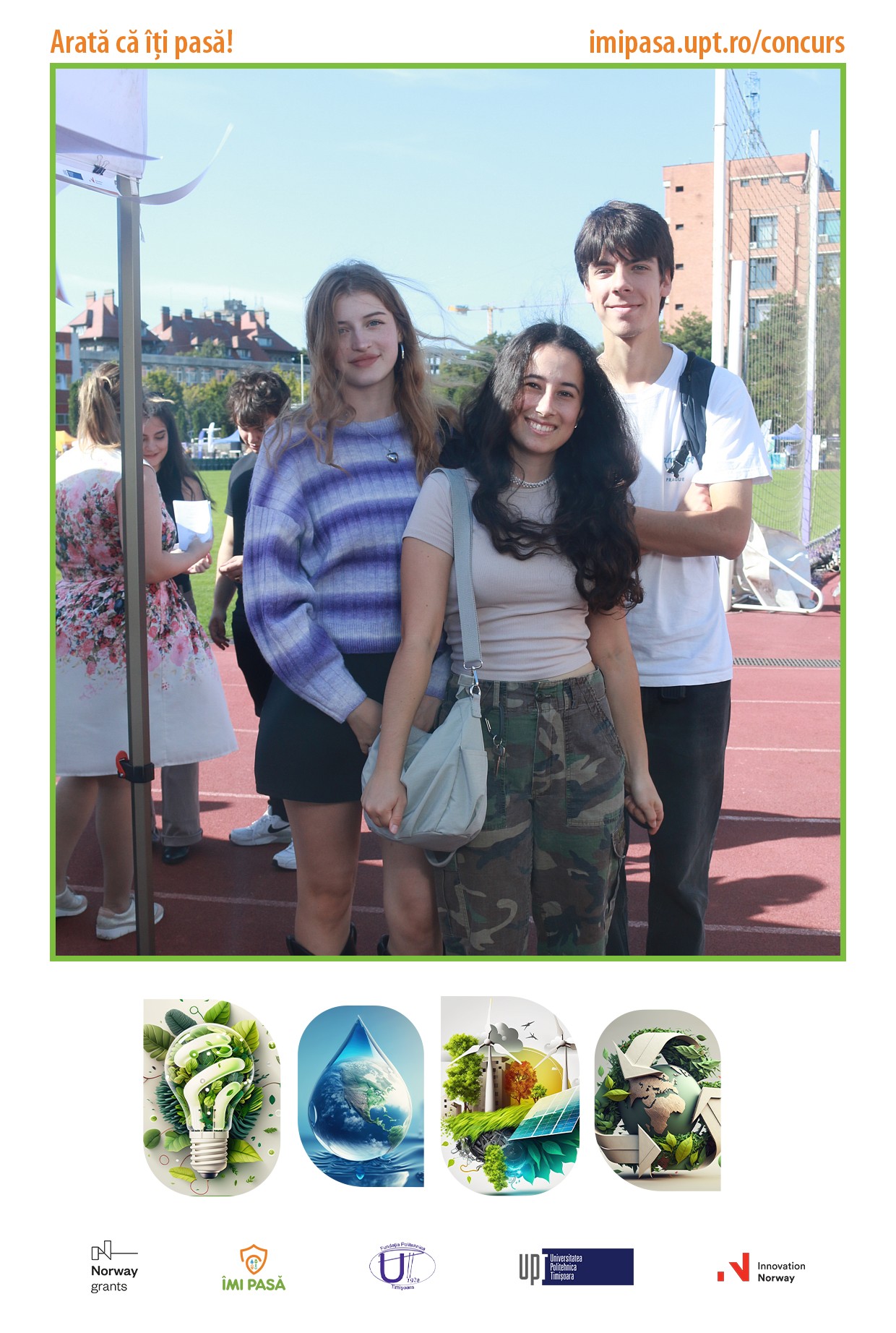
Activities: setting up a stand, taking instant photos that encompassed the visual identity of the project and offering them free of charge to each person caught on camera, providing information about the possibilities for the student years to be the years of learning a sustainable way of life, promoting the video-message contest (October 1 – November 5, 2024) and the prizes prepared for the winners.
Results: approximately 400 people caught on camera, more than 500 flyers distributed to graduates, increased visibility of the project among the members of the academic community.
Conclusions: the mirror-type photo booth was a point of attraction, being the only place where the participants could get a reminder of their first day of studentship. We offered magnets together with the photos so that they could be placed in plain view (for example on the refrigerator door) and represent an incentive to respond favorably to other invitations from the project team.
3.3. 103 for Poli
Date: 8 noiembrie 2023
Event details: sports event organized in partnership with Alergotura Association since 2015, during which, based on registrations, a number of laps of the stadium equal to Politehnica’s age is run. In 2023 UPT celebrated 103 years since its foundation.
Target group: members of the UPT academic community, people concerned about a healthy lifestyle.
Main objectives: promoting the activities and social media pages of the project, encouraging sustainability through health care.
Participants: approximately 600 students and teachers.
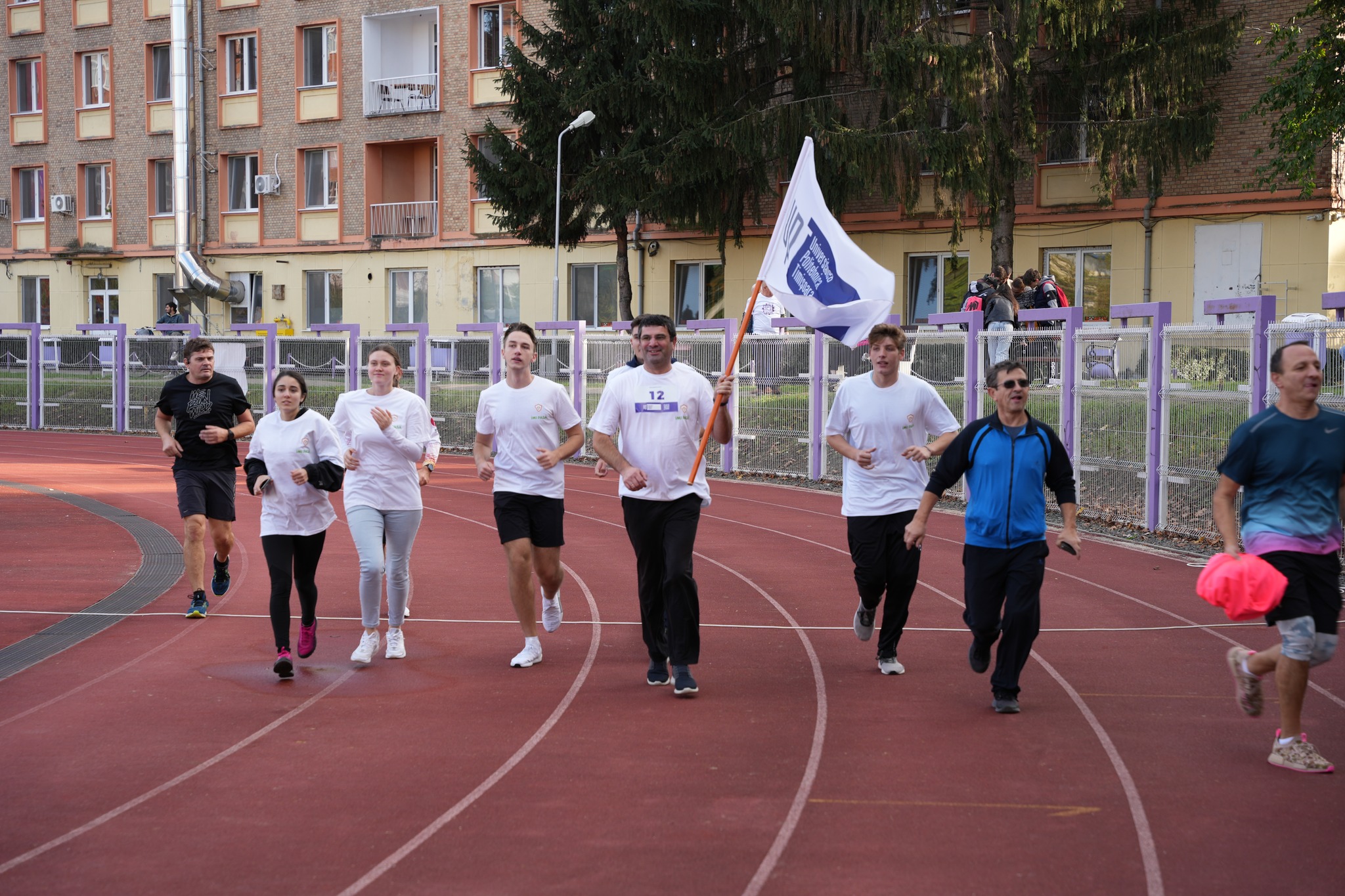
Communication channels: face-to-face – through the two team members who led the 12th and 13th lap of the event, online – by encouraging participation in the sports event, messages on television sets installed in the dormitories, through the web page, which broadcast the invitation to „run for sustainability”.
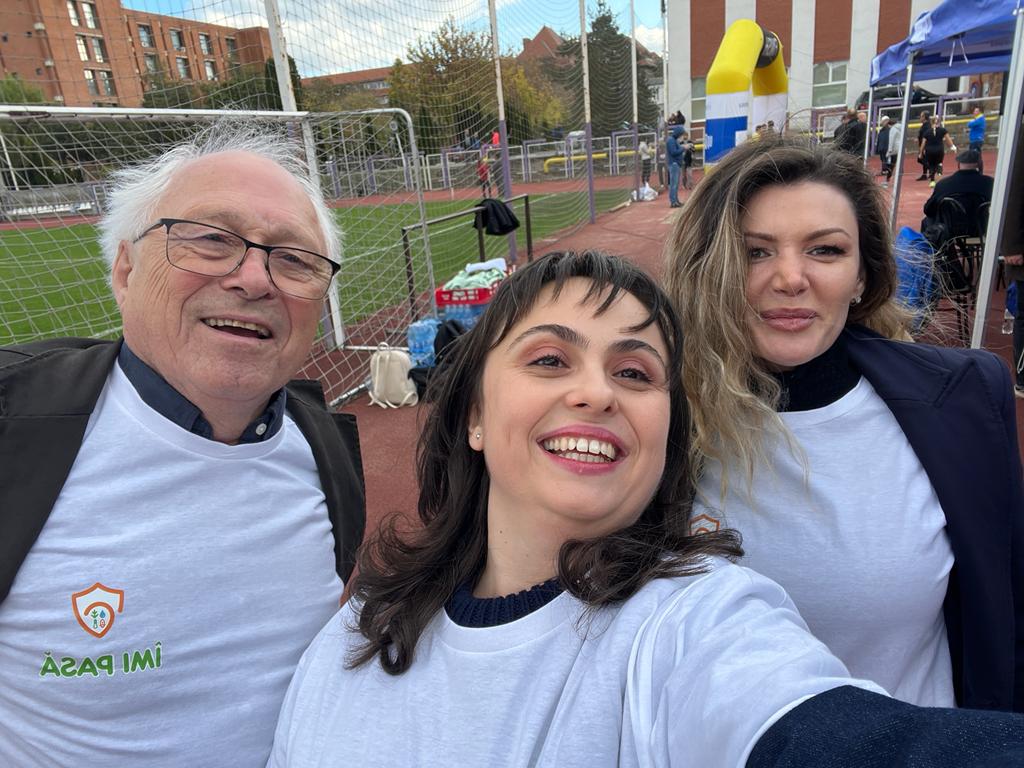
Activities: running two laps dedicated to the project, together with other supporters dressed in personalized T-shirts with the visual identity „I care”, filming the tours with a drone, setting up a stand, promoting the competition between the dormitories and the disco dedicated to the students living on campus.
Results: 100 people ran in the personalized T-shirts, the entire academic community (1400 employees and hundreds of participating students) learned about the 2 „I care” laps, the contest between the dormitories and the LED DiscoTECH were promoted, the TeleUniversitatea channel broadcast images and statements with participants in „sustainability tours”.
Conclusions: the event provided the occasion for the unconventional illustration of some ways of promoting sustainability within the institution. The academic community witnessed an example of project involvement and presence in all the festive moments over the year.
3.4. Change a lighbulb! Choose an economical one!
Stage 1 – Career Days
Date: 18 Octomber 2023
Event details: Career Days is the largest job fair organized by a university in Western Romania. More than 50 companies and more than 5000 young people looking for a job participate in each edition.
Target group: students and master’s students of the Politehnica University Timisoara, young people looking for a job, companies and firms that want to receive students in practice, internship or hire.
Main objectives: organizing the first event in the „Change a light bulb” campaign. Choose an economical one!”, promoting the project’s activities and social media pages, promoting the video-message contest, encouraging involvement in the competition between UPT dormitories.
Participants: approximately 5000 students.
Communication channels: face-to-face – through Career Days volunteers.
Activities: by participating in the „treasure hunt”, the students had the opportunity to receive a smart bulb with a light and motion sensor. At the same time, students were invited to adopt responsible consumption behaviors in the dormitories, in order to support the contest that would bring the title of „Champion of responsible consumption” to the winning dormitory.
Results: 300 young people received an economic light bulb, and 80 of them became followers of the project’s social media pages.
Conclusions: the presence of the project at this event contributed to increasing notoriety, not only among students, but also among representatives of the economic environment. Moreover, it represented the starting point for the initiation of several additional partnerships within the project.
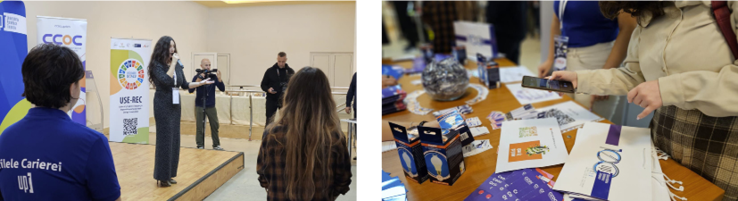
3.4.1. Opening of Career Days 3.4.2. Students scanning the QR code
Stage 2 –sampling event in the dormitories
Date: 2 November 2023
Event Details: The event aimed at distributing the remaining approximately 800 smart bulbs purchased through the project.
Target group: students staying in dormitories 19C, 20C, 21C and 22C, as well as any other applicants from neighboring dormitories.
Main objectives: to remove incandescent light bulbs from UPT dormitories, to inform students about the benefits of using LED light bulbs.
Participants: approximately 700 students and teachers.
Communication channels: messages on TVs installed in the dorms, messages sent via dorm committee groups, messages sent by administrators.
Activities: students present in the hallway of dormitory 21C could find out about the difference between the existing products on the market and could replace traditional light bulbs with „smart” ones. The major advantages of the offered sensor bulbs, in addition to saving electricity, are the easy installation and automatic operation.
Results: 700 students benefited from the light and motion sensor bulbs either directly, through personal pickup, or indirectly through dorm administrators installing such bulbs in common access areas; news about the activity was braodcast on TeleUniversitatea Timisoara.
Conclusions: the installation of sensor bulbs helped to reduce energy consumption and generated discussions among students on the usefulness of this type of „smart” bulb.
3.5. LED DiscoTECH (Silent disco)
Date: 17 November 2023
Event details: LED DiscoTECH was an invitation to party in a multifunctional space, with an atmosphere created exclusively by LED light projections, where DJ Benito and MC Steliano conveyed the main messages of the „I Care” project on the rhythm of music.
Target group: students living in UPT dormitories, other students of Politehnica University Timisoara.
Main objectives: promoting the competition between dormitories and motivating students to get involved in reducing electricity, water and heat consumption; awarding the 10 winners of the video message contest.
Participants: about 500 students, including the winners of the video message contest.
Communication channels: posts and reels on Facebook and Instagram, announcement on the Student UPT app, poster displayed on television sets mounted at the entrance of dormitories, the invitation sent through the student associations.
Activities: the party took place in a multifunctional space (Architecture Club), located at the Faculty of Communication Sciences. Collaboration with a team of professionals in the entertainment industry ensured a pleasant atmosphere and qualitative music. During the event, there were messages promoting the project, as the logistics package also included a 2/4 m LED screen.
Results: we created an original event, in an atypical space, with memorable moments – lights off to be able to reflect on the needs of the planet and generate Instagrammable images created with the help of fluorescent bracelets distributed by the organizers. The party was broadcast on the project’s Facebook page, via live streaming. We also generated a moment of awareness about noise pollution and the power consumption generated by the audio installation. We offered the prizes for the video message contest in a casual setting that combined the academic learning experience with age-specific fun. https://www.facebook.com/photo/?fbid=185138441317151&set=a.141736218990707
Conclusions: the partnership with the BRD increased the students’ interest in the competition and additionally motivated them to participate in the award ceremony organized in the discotheque. The interaction between the students, occasioned by the party, reinforced the concern for the environment shown by some of them.
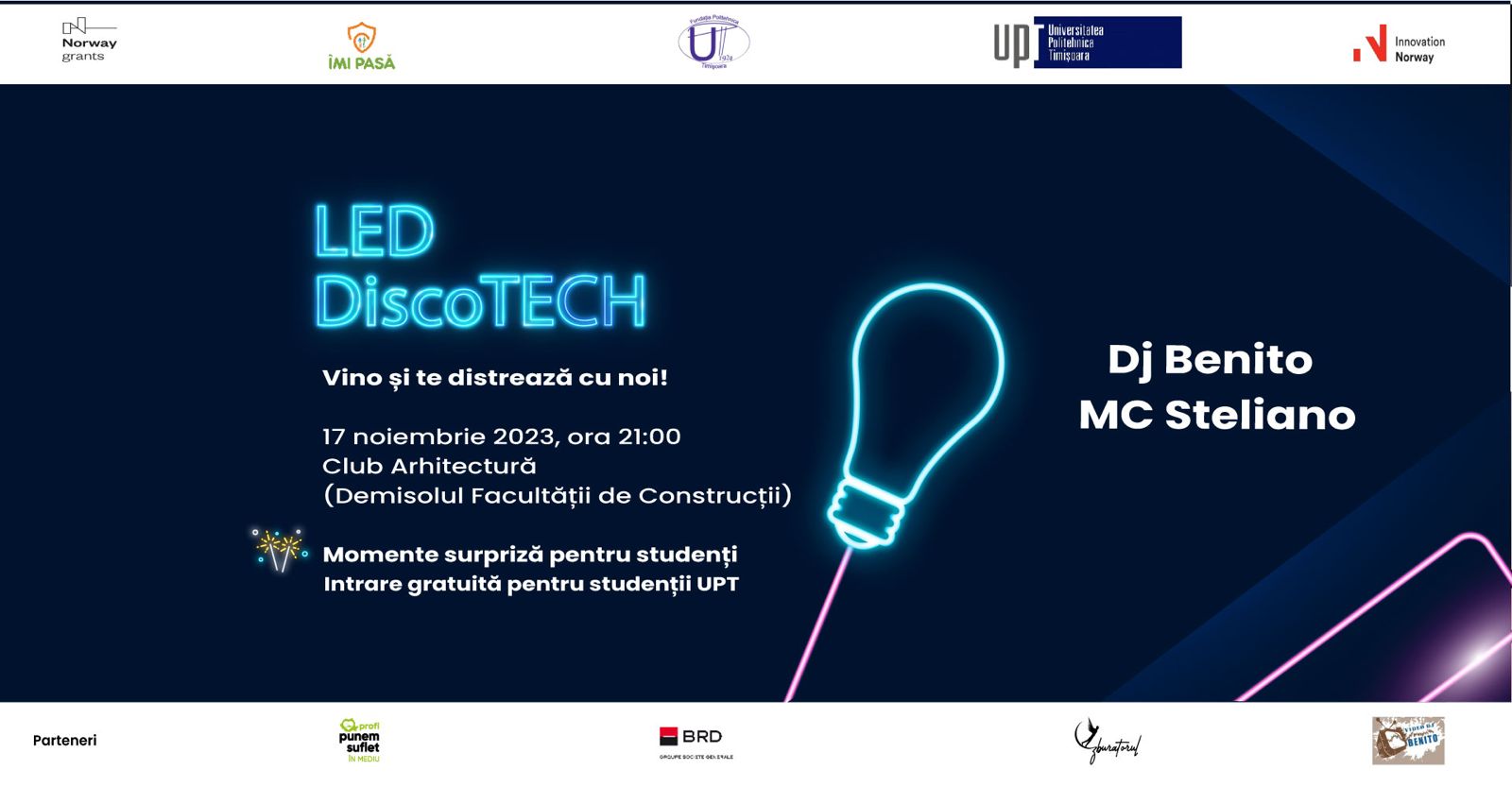
3.5.1 Design for advertising on TV sets
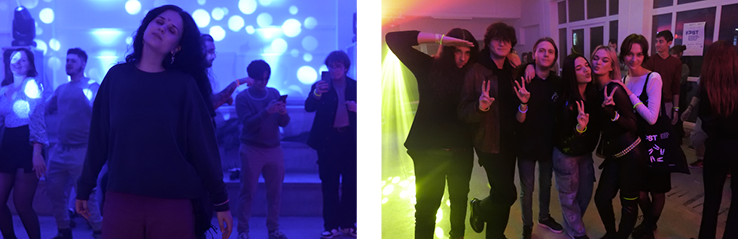
3.5.2. Participants at LED DiscoTECH
3.6. Sustainability skills for the workplace
Date: 10 April 2024
Event details: the Sustainability skills for the workplace seminar, held as part of the Career Days, XXIV edition, drew attention to the fact that new jobs require not only advanced professional knowledge and skills, but also a deep understanding of the society of the future.
Target group: UPT students, participants of the job fair.
Main objectives: understanding the concept of sustainability in the context of career development and practicing some skills needed in the society of the future.
Participants: approximately 60 students.
Communication channels: the Meta ecosystem and Google AdWords, announcement on the Student UPT app, the message broadcast on the televisions installed at the entrance to the dormitories.
Activities: hiring an experienced trainer to generate knowledge in the 2-hour seminar, team exercises, wrap-up session.
Results: 56 students present at the seminar, favorable feedback from them, over 41,000 accounts reached through dedicated Facebook posts, total reach of almost 400,000 people on the project’s Facebook and Instagram pages, a 700% increase in visits on web page.
Conclusions: the intensive promotion of the event brought an increase in the visibility of the project and the Career Days job fair. Participating students stated that they would repeat the experience. The number of people who physically attended the event was, however, below the estimates based on the results of the online promotion campaign.
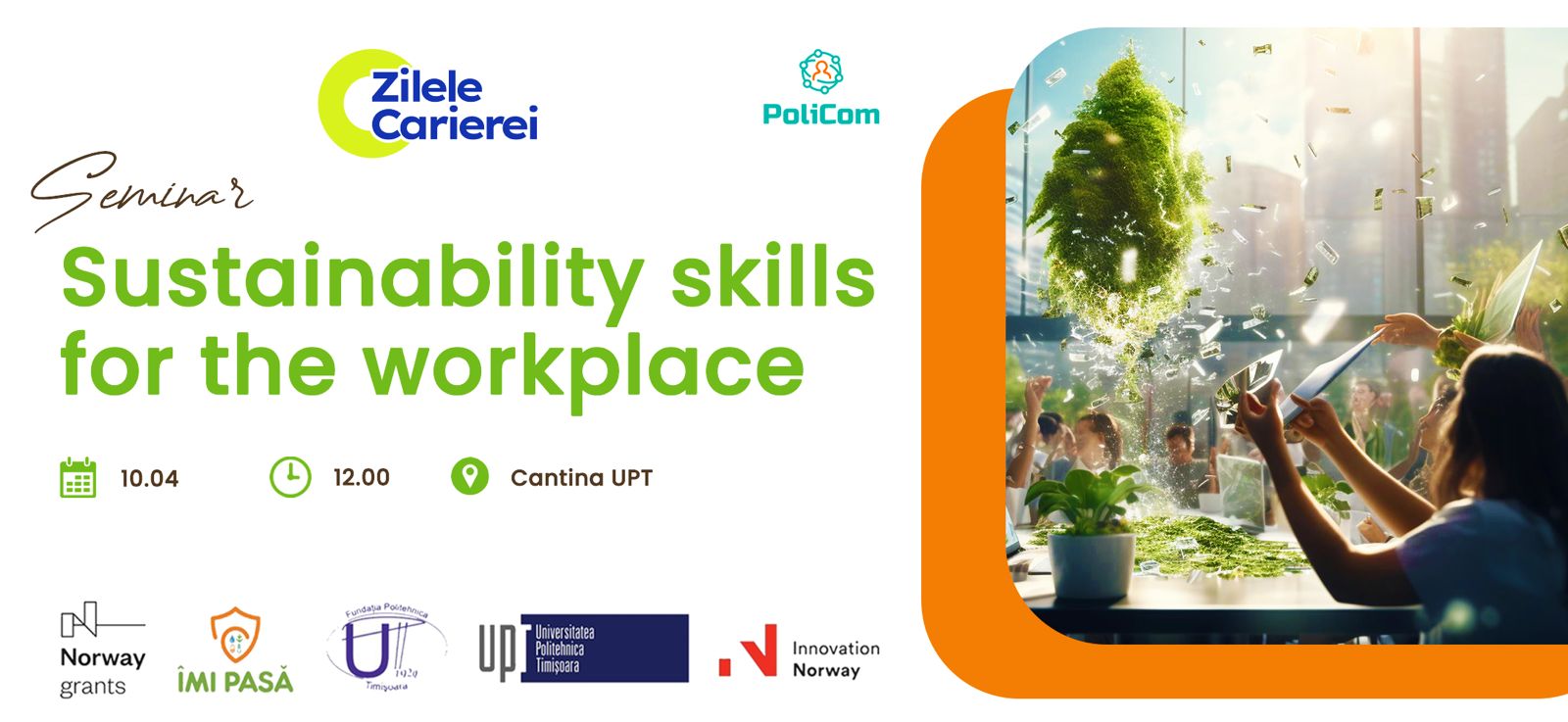
3.6.1. Design for TV sets
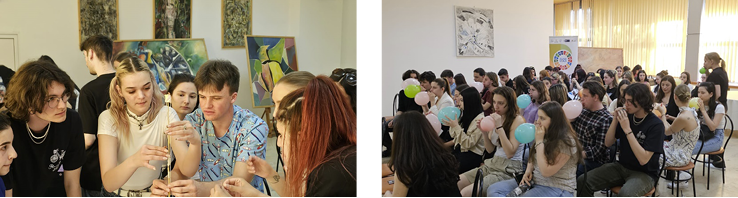
3.6.2. Teambuilding activities
3.7. Timisoara universities: education and action for sustainability
Date: 12 April 2024
Event details: the conference organized under the auspices of the Timisoara University Alliance brought together universities, public utility providers, local authorities and the economic environment with the aim of creating synergy between initiatives and strengthening the network of specialists concerned with sustainability.
Target group: representatives of local authorities, the four public universities members of ATU, public utility providers and the economic environment.
Main objectives: the exchange of ideas and best practices between local actors in order to identify common concerns and support efforts to implement the sustainable development objectives provided in the 2030 Agenda, stimulating synergy between projects to optimize the process of pursuing sustainable development objectives.
Participants: 8 institutions, students representing universities.
Communication channels: direct invitations sent to the management of the Timisoara City Hall, Timiș County Council, Timiș Chamber of Commerce, Industry and Agriculture, Aquatim, Retim, Timisoara state universities, posts on social networks, running a gif with the graphics of the event on the LED billboards in the city, press release, news on Teleuniversitatea TV.
Activities: presentations of the most important sustainability projects carried out by each of the participating institutions, 2 debate sessions, networking opportunities.
Results: awareness of the diversity of concerns in the field of sustainability, consistent exchange of ideas, identification of new partners for joint projects, approach to local actors.
Conclusions: the presentations were of high standard, the exchange of ideas contributed to broadening the horizons of all those present, the student interventions were useful and welcomed, the availability for cross-collaborations was expressed by all participants.
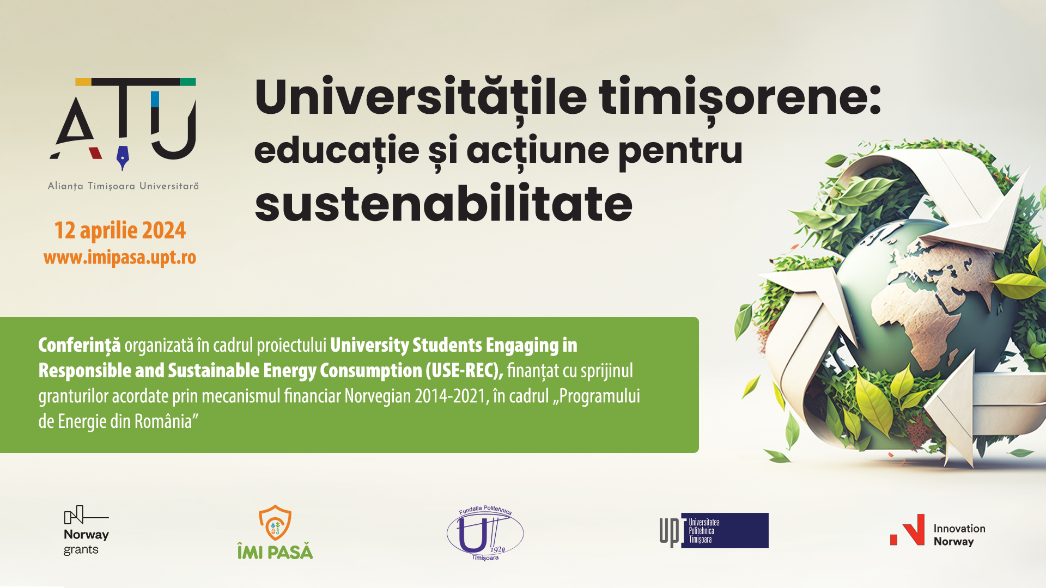
3.7.1. Design for LED billboards
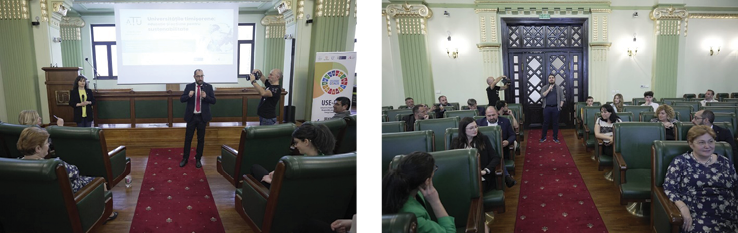
3.7.2. speaker from USVT 3.7.3. Student representative
Online Campaign
3.8. Contest of students’ videoproductions on social media accounts
Date: 1 October – 5 November 2023
Campaign Details: students were invited to share their thoughts on a „greener” future in a visual manner on social media channels. In the end, 45 valid video productions entered the evaluation according to the specifications mentioned in the contest regulations. Since most of the videos were uploaded to social platforms towards the end of the contest period, there was little time left to increase social media engagement.
Target group: all students of Politehnica University Timisoara
Main objectives: encouraging documentation on topics of interest for sustainability, with a role in awareness, perception and behavior change.
Participants: 49 video messages, of which 45 remained in the contest.
Communication channels: posts and reels on Facebook and Instagram, announcement on the Student UPT app, poster displayed on the televisions mounted at the entrance to the dormitories.
Activities: promoting the contest through mostly virtual messages, evaluating the materials uploaded on social networks, awarding the winners within the LED DiscoTECH. The evaluation was done in a participatory manner, the students being invited to establish a ranking of the best video productions. A team of professionals also evaluated the visual quality of the video messages produced, to award prizes not only based on the “popularity rating”, but also through the filter of the suitability of the messages to the chosen broadcast channels.
Results: the qualitative analysis of the keywords used in the narrative of the videos shows a balanced approach to environmental problems, with students focusing on providing solutions after stating the problem. There were only two videos that ended in a humorous key, with all others adopting a neutral tone or exhibiting a slightly concerned attitude. The main preoccupation of students seems to be recycling.
Conclusions: the coding of student-created messages results in the following categories: general consumption reduction (G), electricity saving (E), water saving (W), recycling (R), pollution (P) and other (O). The results are shown in the table below. The preferred platform was Instagram, where 43 of the 45 videos were posted, with Facebook being chosen by only two competitors. The videos attracted 24042 views and 1943 likes. Such messages or types of scenarios can serve as inspiration for further actions in the student community.
Table 3. Results of qualitative analysis of video messages
|
Environmental issue |
|
|
|
PPT dinamic |
Stock videos* |
Original productions |
|
General reduction of consumption (G) |
133 |
1829 |
4 |
2 |
1 |
1 |
|
Saving electric energy (E) |
380 |
4535 |
11 |
7 |
3 |
1 |
|
Saving water (W) |
305 |
3558 |
10 |
10 |
||
|
Recycling (R) |
882 |
10020 |
12 |
6 |
1 |
5 |
|
Fighting pollution (P) |
104 |
1231 |
3 |
1 |
2 |
|
|
Other (O) |
139 |
2869 |
5 |
1 |
3 |
1 |



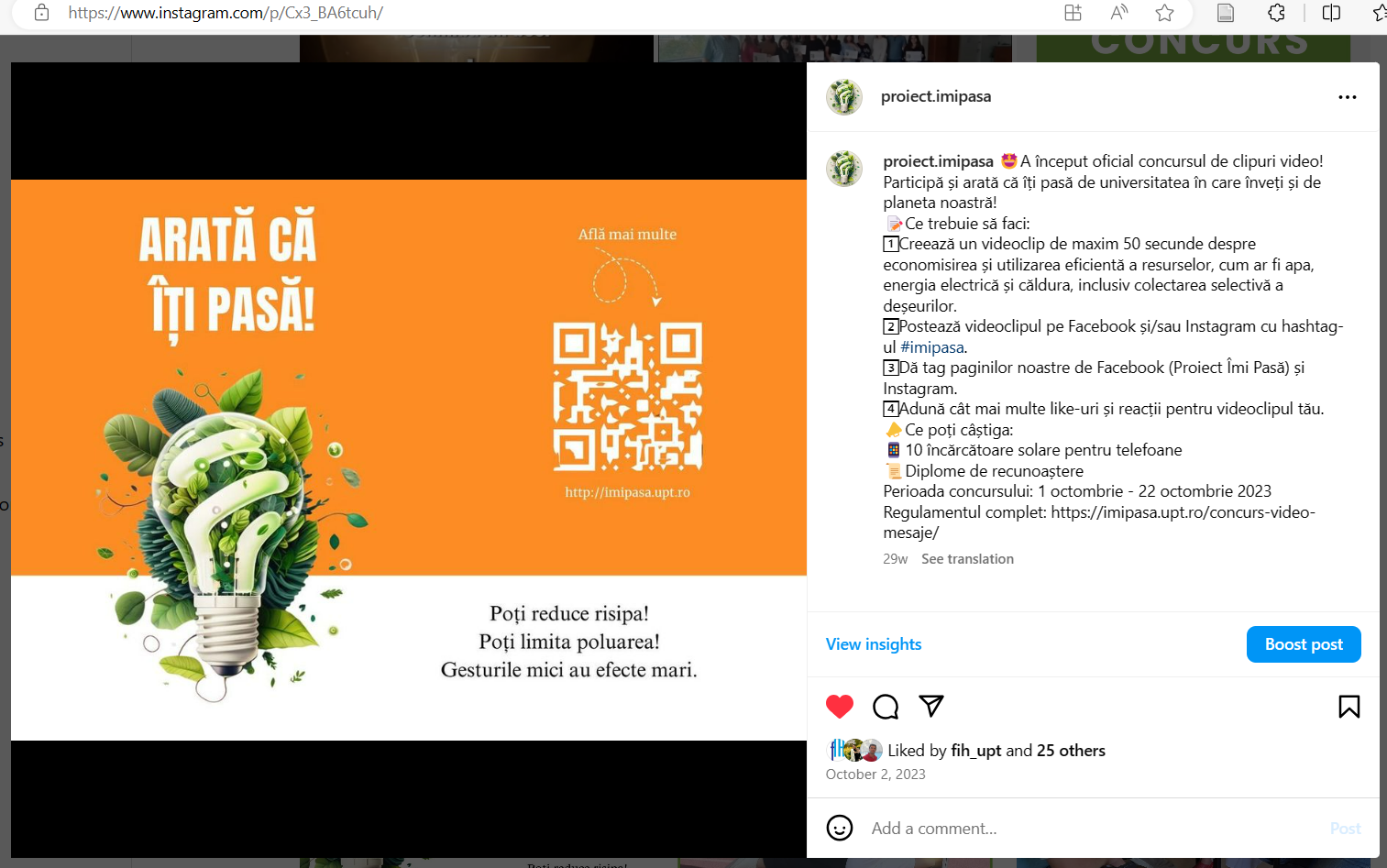
3.8.1. Example of Instagram post about the contest
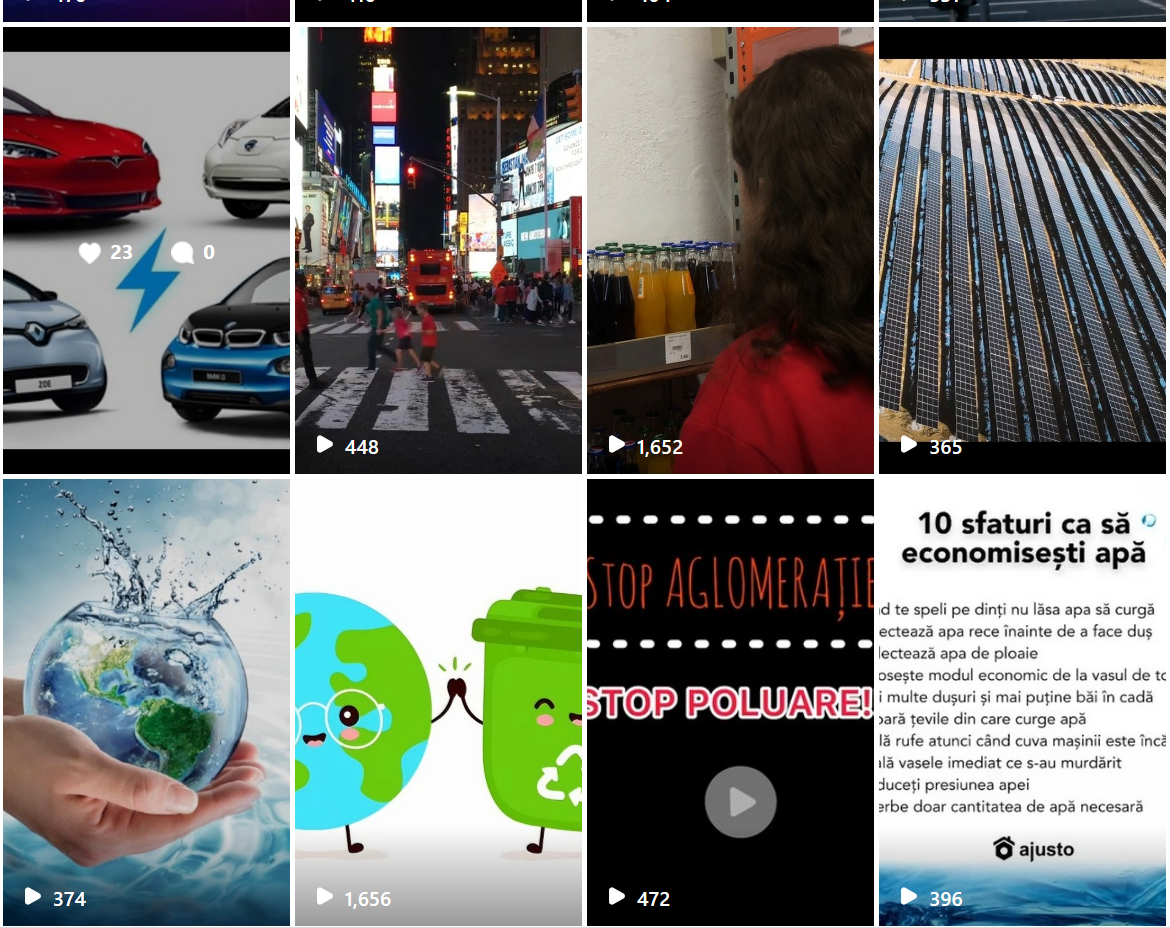
3.8.2. Video clips created by students

3.8.3. Handing a prize
Integrated campaigns
Building a sustainable lifestyle and motivating students to adopt resource-saving behaviors were central objectives in the integrated communication campaigns conducted as part of the project. Knowing that behavior change is a long-term process and that it is based on repeated encounters with a certain type of information, we built long-lasting awareness campaigns, using all available online and offline communication channels. The existing infrastructure was used (application for mobile phones, UPosT electronic bulletin board, whatsapp groups, social media channels of the project and of the university), but also new communication channels were created, following the idea of reducing paper consumption, and thus 17 Smart TVs were bought and installed in dorm access areas. Their use over time demonstrated the need to purchase a remote-control system, to be able to customize the messages according to the specifics of the respective dormitory, according to the communication needs of the respective period.
3.9 „Dorm – champion of responsible consumption” contest
Date: 1 October – 31 December 2023
Campaign details: students of Politehnica University were invited to support the effort to create a „greener” campus, by practicing responsible consumption of energy, water and heat, more conscientiously selecting and collecting waste, as well as reducing the CO2 footprint in life and activities on campus.
Target group: 6000 students of the Politehnica University Timisoara who live in dormitories.
Main objectives: reduction of electricity, water and heat consumption; awareness of the impact of one’s own behavior and undertaking a change.
Participants: students from the 14 dorms entered in the competition.
Communication channels: posts and reels on Facebook and Instagram, dedicated video clips, announcement on the website and on the Student UPT app, information messages played on the televisions installed at the entrance to the dormitories, WhatsApp groups of the dorm councils, own channels of the Social Department in UPT, mesh in the center of the university campus, stickers with recommendations to reduce waste posted in common spaces.
Activities: promoting the competition through a mix of channels and activities aimed at optimizing the impact of communication and mobilizing as many students as possible to get actively involved. The visual concept of the campaign was adapted for online posts as well as for ATL and BTL. We organized LED DiscoTECH as a measure to promote the contest and stimulate participation. The award ceremony took place in several steps – results announced during the dissemination conference, press conference, voucher sampling event in the winning dormitory.
Results: there were consumption reductions, but with quite large variations from one dorm to another. Dormitory administrators were involved and made responsible for enhacing the reach of the message, the University Campus was covered with messages promoting the competition, additional partnerships were developed with Profi Rom Food SRL and Retim Ecologic Service SA.
The laureates were: 21C dormitory – for „responsible water consumption” category, 7C dormitory – for „responsible electricity consumption” category, 1 MV dormitory – for „responsible thermal energy consumption” category and 19C dormitory – champion of champions, for demonstrating responsible consumption in all three categories,
Conclusions: The campaign was visible both online and offline. Students encountered the messages of encouragement to reduce consumption in canteens, on buildings, at the entrance to dormitories, at meetings with administrators, on Facebook and Instagram accounts, etc. There is a considerable difference between what students declare that they are willing to do for the environment and what they actually choose to do, as can be seen in the next chapter.
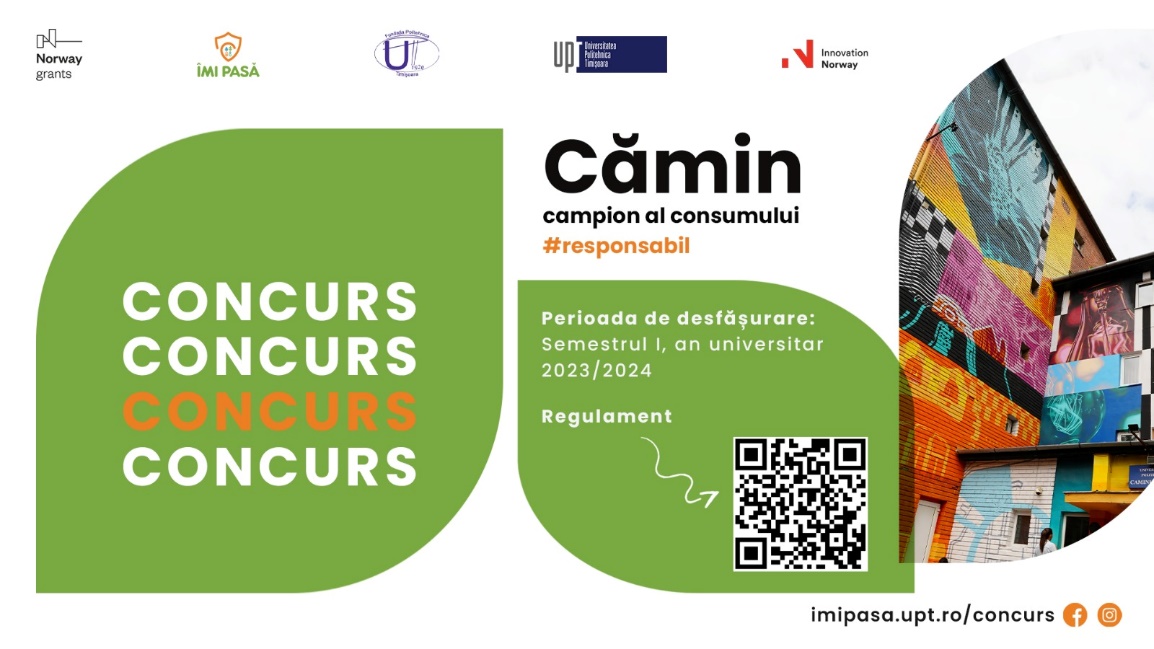
3.9.1. Design of the campaign
3.10. EcoPoli spring cleaning event
Date: 16 April 2024
Campaign details: carrying out an action to green the Student Campus, in partnership with UPT Creative Campus and the Convention of Student Organizations in Politehnica.
Target group: students living on Student Campus in Timisoara.
Main objectives: cleaning the green spaces between the dormitories, awareness of the importance of each greening action.
Participants: 100 volunteers.
Communication channels: posts and reels on the Facebook and Instagram pages of the project and partners (COSPol, UPT Campus Creativ), giveaway campaign in collaboration with a local influencer (Ana-Maria Popescu), announcement on the website EcoPoli transforms student energy into “green” action! – Îmi Pasă Universitatea Politehnica Timisoara (upt.ro) and on the Student UPT application, information messages broadcasted on the TV sets installed at the entrance to the dormitories, WhatsApp groups of the heads of dormitories, the own channels of the UPT Social Department.
Activities: collecting waste from the Student Campus and painting „I care” logos on the sidewalks, at the entrance to each dormitory Proiect Îmi Pasă (USE-REC) (@proiect.imipasa) • Instagram photos and videos.
Results: it was found that there is not much waste left unattended in the spaces around the dormitories, the only generalized problem being cigarette butts. The volunteers got involved and had fun helping to improve the surrounding area. The online impact was very good, the campaign generating a very good online presence of the greening messages, with a total reach of over 400,000 unique accounts. The guerilla marketing initiative was very successful, with the placement of the “I care” logo on the alleys of the Student Campus. The students had a framework in which to channel their desire to contribute to the greening of the campus, combining volunteering with spending free time in a fun manner.
Conclusions: the campaign was received with enthusiasm, enjoyed the support of all those involved and it is desired to be taken over by the university management and turned into a traditional event.
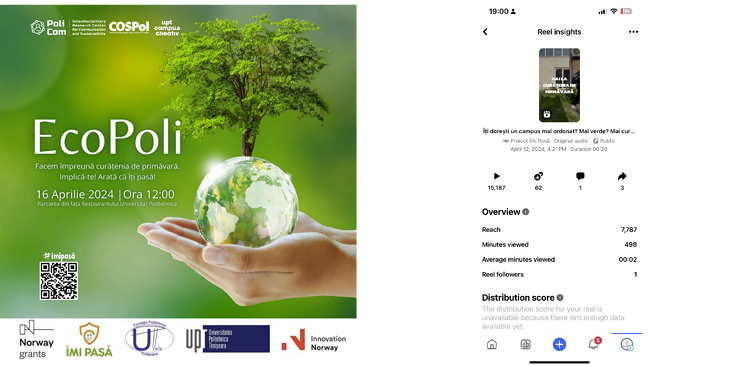
3.10.1. Design of EcoPoli campaign 3.10.2 Reel reach
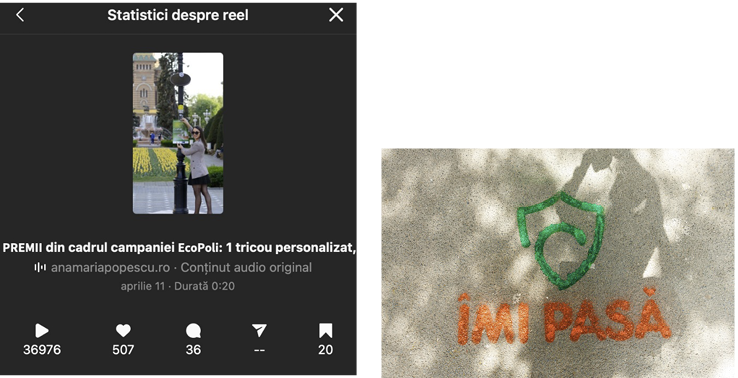
3.10.3 Reach of influencer campaign 3.10.4. The „I care” logo on the pavement
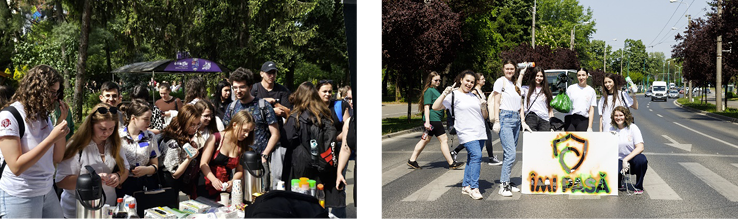
3.10.5. Students at the EcoPoli stand 3.10.6. Students on campus
Project communication, in service of sustainability
Dissemination of results to the national and international scientific community was a constant preoccupation for the project team, exceeding the objectives assumed by the project team. Being aware of the usefulness of the research and of the importance of disseminating good practices, the project team achieved the following visible results:
(a) Conferences
Mariana Cernicova-Buca, Gabriel-Mugurel Dragomir, Vasile Gherhes, Adina Palea, „Involving students in co-creating the future of campus life in Timisoara”, within the international conference Reimagining the city from my window, 13 October 2023, organized by Politehnica University Timisoara and Høgskulen for grøn utvikling (HGUt, Norway), Romanian-Norwegian collaboration in the Politechnica University – new pages in a rich album – Îmi Pasă Universitatea Politehnica Timisoara (upt.ro)
Mariana Cernicova-Buca, Vasile Gherheș, Adina Palea, Gabriel-Mugurel Dragomir, „Students as co-creators of an environment-friendly campus in Timisoara”, presented on 4 March 2024 within the 18th annual International Technology, Education and Development Conference (INTED 2024) organized in Valencia (Spain) on the 4th– 6th March 2024, USE-REC experience shared at a major educational conference in Valencia (Spain) – Îmi Pasă Universitatea Politehnica Timisoara (upt.ro)
(b) Workshops
Mariana Cernicova-Buca, Gabriel-Mugurel Dragomir, Vasile Gherhes, Adina Palea, „Empowering young adults as futures sustainable citizens”, paper presented in the international workshop Empowering Young People as Culture Providers, 16 October 2023, organized by Politehnica University Timisoara and Høgskulen for grøn utvikling (HGUt, Norway), https://www.facebook.com/reel/877416566781339
„Technology and society: sustainability challenges” workshop, moderated by Adina Palea within TIMA23 international conference on “Innovative Technologies for Joining Advanced Materials”, International workshop on sustainability and societal needs – Îmi Pasă Universitatea Politehnica Timisoara (upt.ro)
Round table „Communicating science” organized by the Department of Communication and Foreign Languages (UPT), on 15 November 2023, USE-REC project brough to the attention of the academic community of Politehnica Universit – Îmi Pasă Universitatea Politehnica Timisoara (upt.ro)
(c) Scientific articles
Cernicova-Buca, Mariana, Gabriel-Mugurel Dragomir, Vasile Gherheș, and Adina Palea. 2023. „Students’ Awareness Regarding Environment Protection in Campus Life: Evidence from Romania” Sustainability 15, no. 23: 16444. https://doi.org/10.3390/su152316444
Cernicova-Buca, Mariana, Vasile Gherheș, Gabriel-Mugurel Dragomir, and Roxana-Mihaela Sirbu. 2024. „Electrically Savvy or Not? Tentative Portrait of the Romanian Student as a Consumer of Electric Devices and Utilities” Sustainability 16, no. 3: 1239. https://doi.org/10.3390/su16031239
(d) E-book
Vasile Gherheș (coord.), Communicating sustainability. Diagnosis, intervention, and transformative experiences on a student campus, Tritonic, 2024.
Communication channels used throughout the project
Web page
Îmi Pasă Universitatea Politehnica Timisoara (upt.ro)
Facebook page
https://www.facebook.com/imipasa.upt
Instagram page
https://www.instagram.com/proiect.imipasa/
Hashtags
#imipasa #proiect #sustenabilitate #viitorverde #creativitate #viatadestudent #UPT #campus #constientizare #EcoPoli #NorwayGrants
Student electronic bulletin board – UPosT
https://upost.upt.ro/2024/04/25/iubesc-planeta-imi-pasa-de-resurse/
Mobile phone app – Student UPT
https://apps.apple.com/us/app/student-upt/id1278676023
Smart television sets
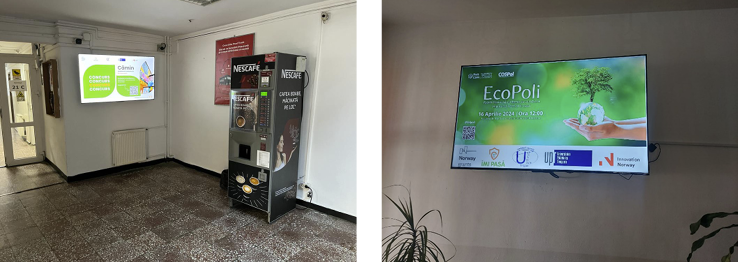
Smart TV in dorm 21C Smart TV in dorm 4C
Youtube channel
https://www.youtube.com/@PolicomUPT
Press releases
13–07-2023-consum-responsabil-si-sustenabil.pdf (upt.ro)
06–03-2024-upt-a-premiat-caminele.pdf
12–04-2024-Dezbatere-privind-educatia-pentru-sustenabilitate-sub-egida-ATU.pdf (upt.ro)
TV shows
https://www.facebook.com/TVRTimisoara/videos/639124238391268
https://www.facebook.com/TeleU.Timisoara/videos/1119516699241206
TeleU: „Raport săptămânal” – YouTube

3.1.1. The project core team by the message pane
3.1.2. Graduates waiting to have their photo taken
3.1.3. Word cloud generated with graduates messages
3.1.4. Participants at the graduation ceremony

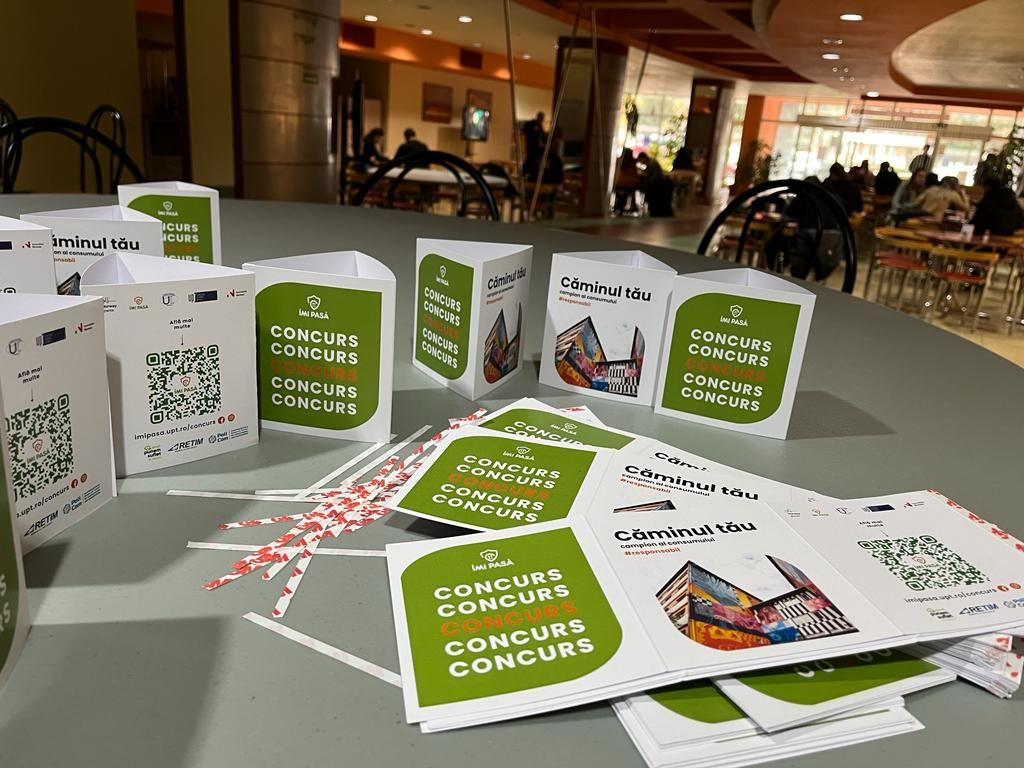
3.2.1. Flyer design - front face
3.2.2. Photo handed to students
3.3.1. Vasile Gherheș – leader of lap 12
3.3.2. Erink Engh (Norvegia), Adina Palea, Lucia Teodor on the running track
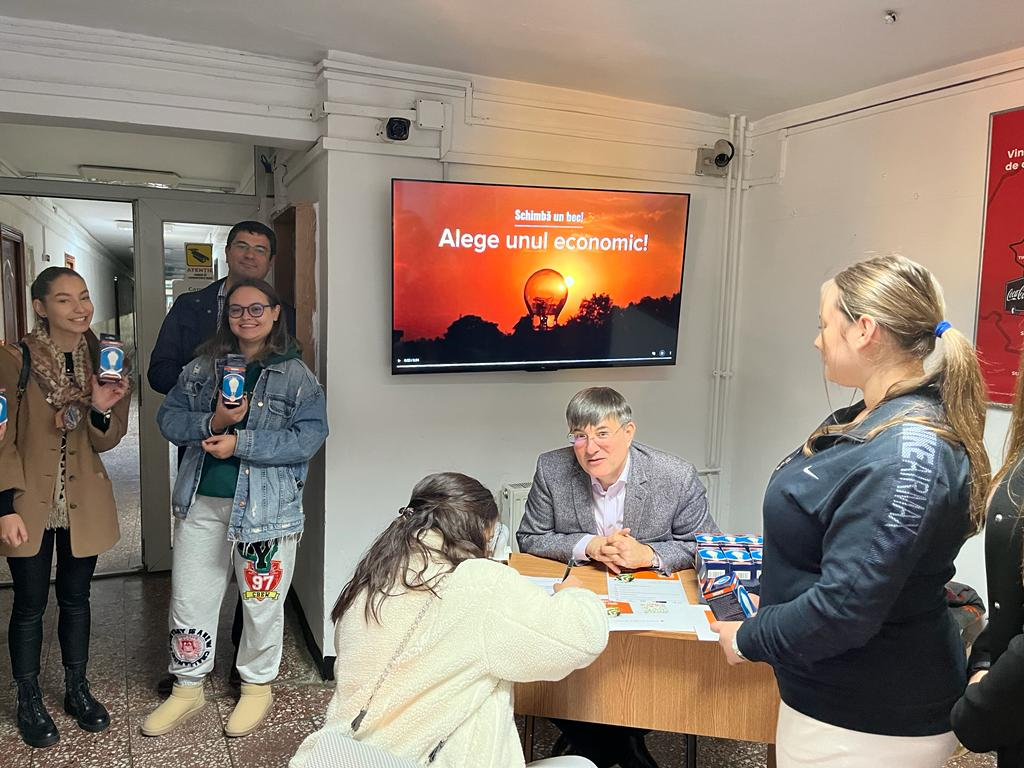
3.4.3. Distribution of light bulbs in dorm 21C
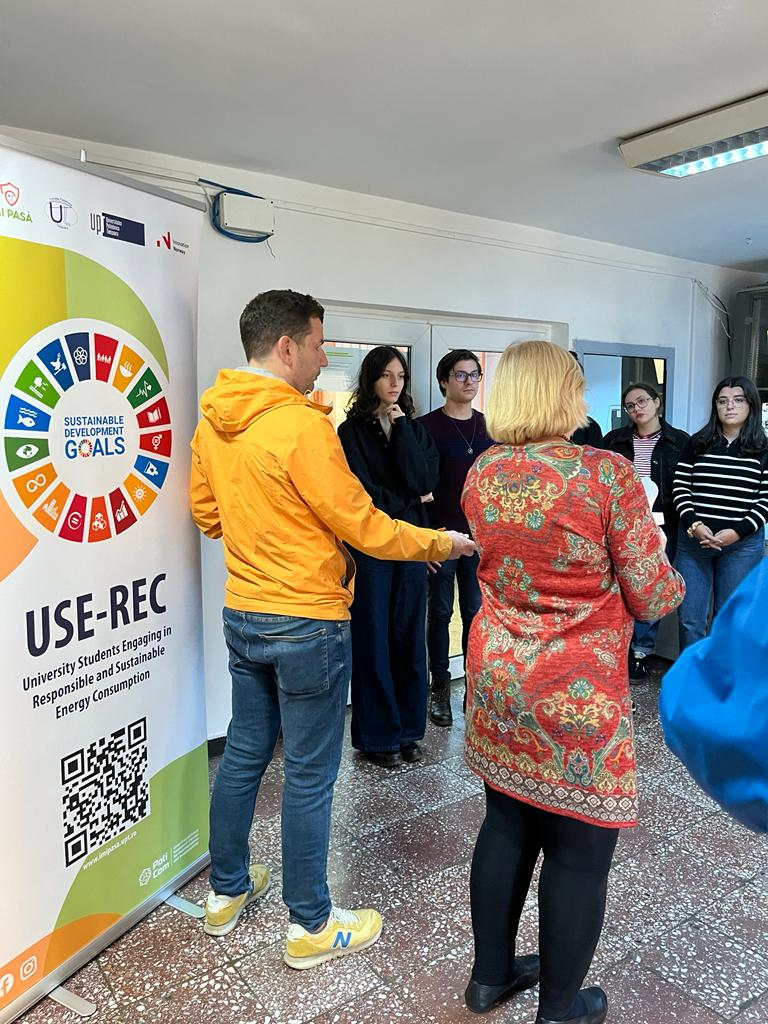
3.4.4. Mariana Cernicova explaining the usefulness of LED bulbs
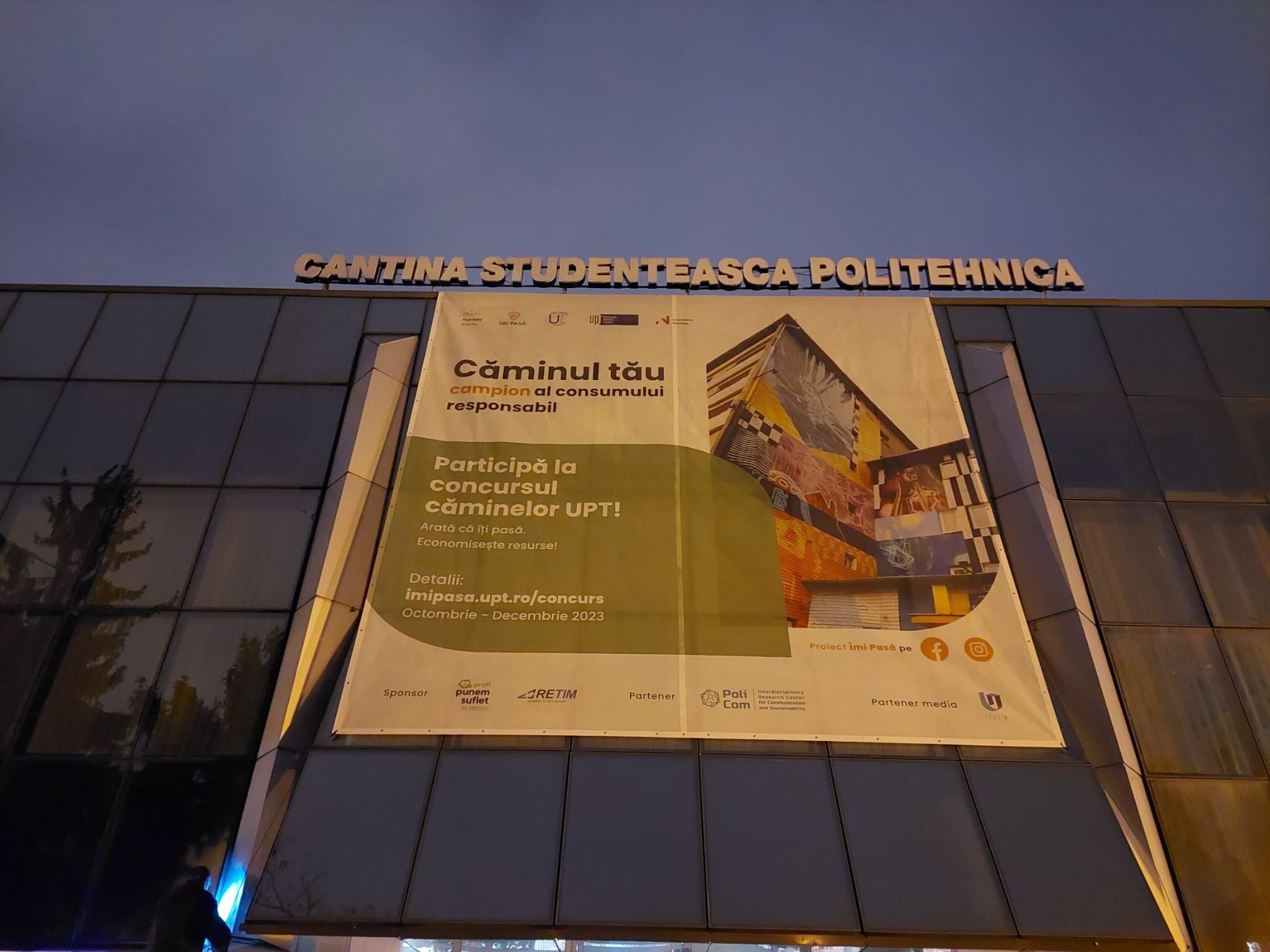
3.9.2. Mesh on the canteen
3.9.3. Triptych in the university restaurant
3.9.4. Handing vouchers to residents of the winning dorm
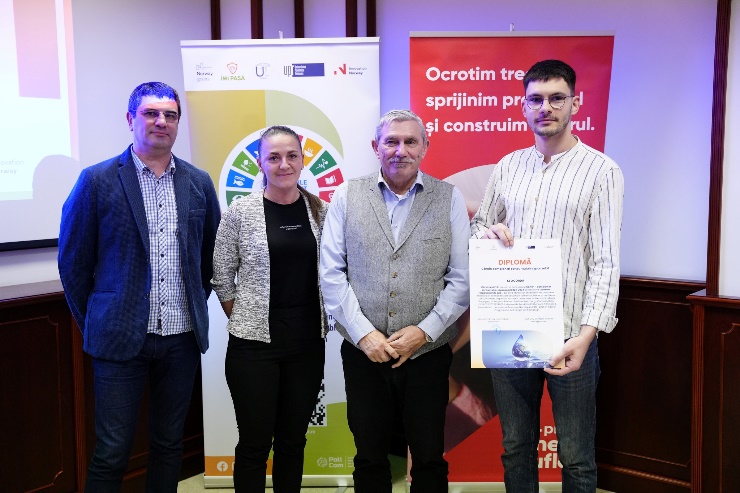
3.9.5. Awarding the diploma to the winning dorm